



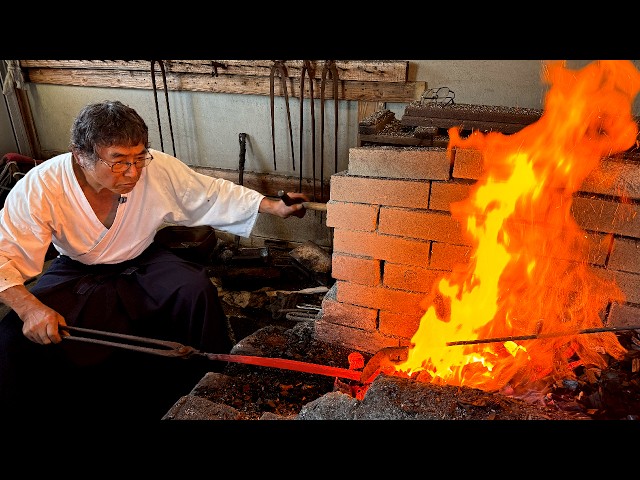
The art of Japanese sword making is among the most admired and honoured arts in the world. With a long history of functional and aesthetic excellence, the craft of sword-making in Japan has a long tradition of wisdom and cultural heritage. Swordsmithing in Japan is a vibrant legacy of craftsmanship, metalwork work and spirituality. Ten incredible facts will be discussed in this piece that will show you how deep, exact, and committed the ancient art was.
- One of theTraditionss more than a millennium old
The art of Japanese sword-making originated over a thousand years ago in the Heian period (794 – 1185). What began as a mere crafting of weapons became an art. Each blade is a story of its era, and it has been made by the hands and the heart of the swordsmith. The oldest still extant swords are still reflective of the Japanese commitment to perfection and tradition.
- Japanese sword making: the art and soul
Swordsmithing in Japan does not simply entail a metalworkingprocess,;it is a spiritual practice. Conventional sword makers tend to cleanse themselves before forging the metal, considering the process a religious ceremony. Their attention, their patience and their reverence to their work come with every hit of the hammer. This religious association changes every sword to be more than a weapon; it is a devotional and balancing work.
- The Secret of Tamahagane Steel.
Japanese swords are made out of iron sand, and their core constituent is called Tamahagane. It takes days for this steel to melt sufficiently pure in a clay furnace known as a tatara. In order to remove impurities and increase the metal’s strength and flexibility, swordsmiths fold the metal numerous times. This procedure provides each blade with its own pattern of grain and unrivaled sharpness.
- Folded Steel in the Name of Strength and Beauty.
Orikaeshi tanren is the folding method, and it is one of the best-recognized features of making a Japanese sword. Through repeated reheating and hammering of the steel, smiths work the molecules into place and trap carbon uniformly in the blade. The outcome is a sword that is able to withstand a fierce battle and remain in an elegant and wave-like design known as hada. It is an icon of power and beauty.
- The Curvature of the Blade: an Accidental Joy.
The beautiful curve of the katana sword is admired by many people, yet not many end users know that the curve is a natural occurrence. Swordsmiths warm the blade and quickly chill it in the process of quenching. Due to the varying cooling speeds of the edge and the spine of the blade, the metal is slightly bent. It is this spontaneous curve that makes the sword iconic and promotes effective, speedy use on heavy blows.
- The Art of refining and of perfection.
Polishing is done after forgin,g and it will make the raw blade a masterpiece. Master polishers, called togishi, take weeks to polish each inch on natural stones. They lay out the fine lines of the steel and outline the sharp edge, with care. That last polish shows the nature of the sword, it is glittering, mirrored and deadly sharp.
- Swordsmithing: The Japanese Contribution to Samurai Culture.
Swords were considered as a continuation of the soul of Samurai warriors. The katana symbolized the honor, loyalty, and identity of a warrior and existed many centuries ago. The swordsmiths were recognized as a high person in the society since their occupation characterized the spirit of the samurai group. Swords remind many Japanese families today as a symbol of ancestral protection and valor.
- The Revival of Old Artistry.
Swordsmithing is practiced even today, in Japan, in spite of all modernization. Swords are still made by certified master swordsmiths who are licensed by the Japanese government and manufactured using traditional methods. These contemporary craftspeople maintain the old techniques and adapt to exhibitions and collectors. Their commitment to it is such that the art of swordsmithing in Japan will never die.
- The Tradeoff between Function and Aesthetics.
A Japanese sword is a weapon as well as a representative of aesthetic excellence. Each part, including the geometry of the blade and even the wrapping of the handle, is harmonic. The balance of power, accuracy, and grace in the design reveals the special Japanese skill to unite utility with aesthetic beauty. Every sword is a poetic work of steel.
- The Legacy Lives On
The heritage of the Japanese sword-making process still lives on and attracts the attention of artisans, historians, and collectors today all over the world. This living art has its museums and cultural centers and festivals. The ethos of handwork, discipline, and reverence continues to inform each sword made. An illustration of the timelessness of commitment, swordsmithing in Japan is a reminder that the Japanese culture dates back to the Ancient Period.
(FAQs)
Q1: How are Japanese swords any different?
Japanese swords are distinguished by their aesthetics and durability. Their flexibility and toughness are achieved by the process of bending Tamahagane steel, making them tougher and more flexible than most other blades.
Q2: Does swordmaking in Japan exist to this day?
Yes, and it remains strictly licensed by the government. The ancient methods of making swords are still practiced by modern-day swordsmiths to maintain this cultural art form.
Q3: Why do Japanese swords have a curved blade?
The curve is created naturally during the quenching process by the uneven cooling rates, and enhances cutting quality and handling.
Q4: What is the time taken to produce a single sword?
Making a traditional katana may require several months (including forging, polishing, and mounting the blade).
Q5: Do real Japanese swords get made to be used?
Although most contemporary swords are crafted as either a collector’s item or as a ceremonial object, their standards are equal to the masterpieces of ancient swords.
Conclusion
The art of Japanese sword making is an eternal process of discipline, art, and spirituality. Each sword represents hundreds of years of tradition, as the Japanese love perfection and harmony. Even the process of folding Tamahagane steel up to its final polish is a story of patience and perfection. This living art still amazes the world, reminding us that we should have mastered our art through dedication, rather than haste. With the shining blades of the past and the present in our admiration, we commemorate a craft that will always be the soul of Japan.