



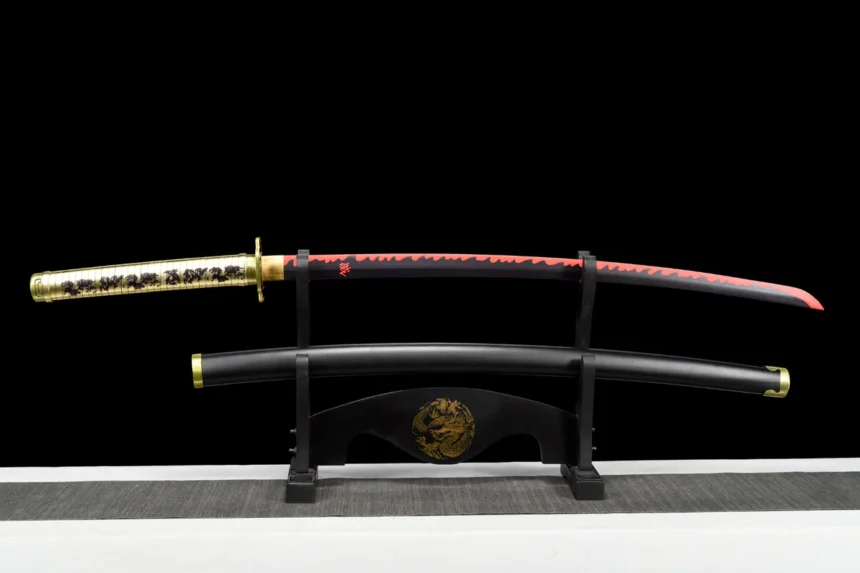
One of the most interesting paths in the history of weapon-making is the history of the katana. Not only is this a weapon, but it is also a cultural icon of Japan. The katana has been developed over centuries, embodying the spirit of the samurai and the craftsmanship of Japanese blacksmiths. In this paper, we will explore nine interesting chapters, unraveling the experiences that led to the katana becoming the mythic weapon of envy throughout the globe.
- Origins of the Katana
The Japanese swords had their earliest influence from the Chinese and Korean swords. As the years went by, the Japanese swordmakers altered these designs to fit the local fighting styles. This is the initial phase of the evolution of the katana into a distinctly Japanese weapon.
- Ascent Amidst the Heian Era
The time period of curved blades was during the Heian era (794–1185). Because warriors needed a sword that could cut well while mounted.
- The Birth of the Katana Form
This was a significant time in the history of katana. Sword makers had mastered a blade with one edge, a curved surface, and a long handle during the Kamakura period (1185-1333). It enabled samurai to be able to draw and hit within close range. Such a shape gave the real start to what we today refer to as the katana.
- Mastery of Swordsmithing
Japanese cooks became extremely talented in using hard steel to produce sharpness and soft steel to produce durability. The method of forging called differential hardening made the blade have its recognizable wavy temper line (hamon). This creation made the katana powerful as well as graceful.
- Symbol of the Samurai
The katana was not just a sword, but it was a representation of pride and zeal to the samurai. The possession of a katana was the privilege of the warrior. It was the spirit of the samurai, and it strengthened the position of the samurai as the protectors of Japanese society.
- Golden Age of the Katana
The most successful endeavors of the katana were the Muromachi and Momoyama productions (1336–1603). Swords made by great smiths such as Masamune and Muramasa were unsurpassed in quality. The katana was an effective art and admired because of its appearance and cutting power.
- The revolution of the Edo Period.
Unfortunately, during the Edo period (1603-1868), the peace lowered the necessity of weaponry on the battlefield. The katana started to obtain metaphorical meaning. Swordsmiths gave greater importance to decoration, carving, and arts, which solidified the position of the katana in Japanese culture.
- Decline and Revival
The samurai were wiped out during the years following the Meiji Restoration (1868), and the katana was no longer official. This interest, though, returned in the 20th century, with martial arts, including kendo and iaido. The katana was once another noble part of Japanese history.
- Modern Appreciation
Collectors, martial artists, and historians across the world are all inspired by the history of Katana. The katanas are in museums, and even master smiths are using the old techniques to make them. They remain an everlasting teaching of discipline, art, and the spirit of a warrior.
FAQ
Q1: How is a katana different from other swords?
Its excellent cutting capacity and balance are attributed to the forging techniques, curved blade, and sharp edge.
Q2: Are samurai supposed to have a katana?
Yeah, the katana was the soul of the samurai and the image of their role and duty as well.
Q3: Does it still make katanas?
There are still certified swordsmiths at work in Japan, with traditional methods of making katanas, but they are considered cultural artifacts, not weapons.
Conclusion
The history of the katana is a new, cultural, and respectable tale. Since its creation as a practical sword up to the present phases when it is used as a symbol of art and discipline, the katana has remained memorable amidst the most well-known swords of all time. One can look at the visions of each age of its evolution as values of the society that gave it birth. This is a living legend of Japanese culture, and the katana continues to be admired throughout the world.